
4
User interviews conducted
2
Competitive analyses – big box then specialty
4
New global navigation categories
1
Strategic pivot driven by research
My Role
Solo designer – Research, IA, Wireframing, Visual Design
Client
Highland Woodworking, Atlanta, GA (bootcamp case study)
Duration
2 weeks · October 2020
Tools
Sketch · Miro · Marvel
The Challenge
A Hidden Gem with an Outdated Online Presence
Highland Woodworking is one of Atlanta's most beloved specialty retailers — but their website didn't reflect the quality, expertise, or community they'd built over decades.
Highland Woodworking is a small, local hardware and woodworking retailer that sells specialty, high-quality tools and supplies. While customers frequently visited the storefront and workshop in Atlanta, the company's online presence didn't reflect the highly curated inventory and exceptional services the retailer was known for. The initial brief was straightforward: redesign the e-commerce site to better showcase products. But like the best design projects, the real opportunity turned out to be something else entirely.
Opening Research
The objective of my initial research was to understand why customers are drawn to small, local woodworking stores over the larger, franchised box store experience. Before investigating the shared goals and unmet needs of Highland Woodworking's customer base, I conducted a heuristic evaluation of the current e-commerce site and compared it against competitors through a competitive element analysis.
The heuristic evaluation revealed several usability issues — no usability catastrophes, but consistent friction across match between system and real world, consistency and standards, error prevention, flexibility and efficiency of use, and aesthetic and minimalist design. My initial hypothesis: reorganize the product catalog and apply consistent UI patterns. I ran a competitive analysis against the obvious competitors — Home Depot and Lowe's — to see how they handled the issues I'd identified.
Initial Assumption
Customers were visiting the Highland Woodworking site primarily to purchase woodworking tools, supplies, and accessories. The navigation needed to be restructured to make product browsing more efficient.
That assumption didn't survive first contact with actual users.
User Interviews
I interviewed four participants with woodworking experience who had previously shopped online for tools and supplies. Questions covered general online shopping habits, pre-purchase research behavior, product review consideration, frequency of purchasing specialty tools, and preferred suppliers. I used affinity mapping to organize key phrases, ideas, and thoughts into grouped clusters.
Two specific quotes stood out among all other responses:
"Atlanta has one of the best woodworking shops in the country, Highland Woodworking. They're very helpful. They normally have classes and a really cool showroom." — Peter D.
"Highland Woodworking is focused more on the actual craft of woodworking and not as much the retail side." — Bill J.
The Opportunity
When Research Changes Everything
The real opportunity wasn't a product catalog redesign. Research revealed that what made Highland Woodworking special — its expertise and community — was exactly what the site was hiding.
Key Insights from Discovery
These quotes prompted me to reconsider the feedback received from my interviews. Rather than solely focusing on customers' acquisition of woodworking products, I directed my attention to the craft of woodworking itself. Four key insights reshaped the direction:
01
Video tutorials for specialty craft tools can often be the determining factor for making online purchases of woodworking supplies.
02
Recommendations from specialty store employees are considered far more trustworthy than opinions from big box store staff.
03
Users are primarily visiting Highland Woodworking's website for woodworking classes & seminars, project tips, and product reviews — not just to shop.
04
Customers prefer visiting storefronts for the expert advice received when discussing products with employees face-to-face.
Redefining the Competitors
After reconsidering the insights gathered during my user interviews, I performed a second competitive element analysis — this time examining websites of smaller, more specialized woodworking companies including Rockler, Woodcraft Tool Supply, and Peachtree Woodworking Supply, instead of big box stores.
This second iteration showed that while these specialty stores also featured superior, hand-picked inventory on their sites, the wealth of knowledge and expertise offered through Highland Woodworking's online platform was simply unrivaled. That was the real differentiator — and the current site was hiding it.
The Strategic Pivot
Research showed that individuals who frequented the Highland Woodworking online site were not only purchasing fine woodworking products, but were also seeking educational resources offered by the retailer. Highland Woodworking stated that they strongly pride themselves on their reputation of becoming a reliable source of advice for the purchase and use of woodworking tools — a reputation built through their weekend woodworking seminar program, their product-oriented newsletter, and their monthly Wood News Online email subscription.
Based on my research findings, I determined that redesigning their online presence to primarily feature their goods — and not their expertise and services — would serve as an injustice to the company and presumably decrease the percentage of returning customers and increase the site's bounce rate. From that point forward, the booking of classes and availability of woodworking resources would be the predominant focus for the redesign, with product purchasing to follow.
Understanding the Woodworker
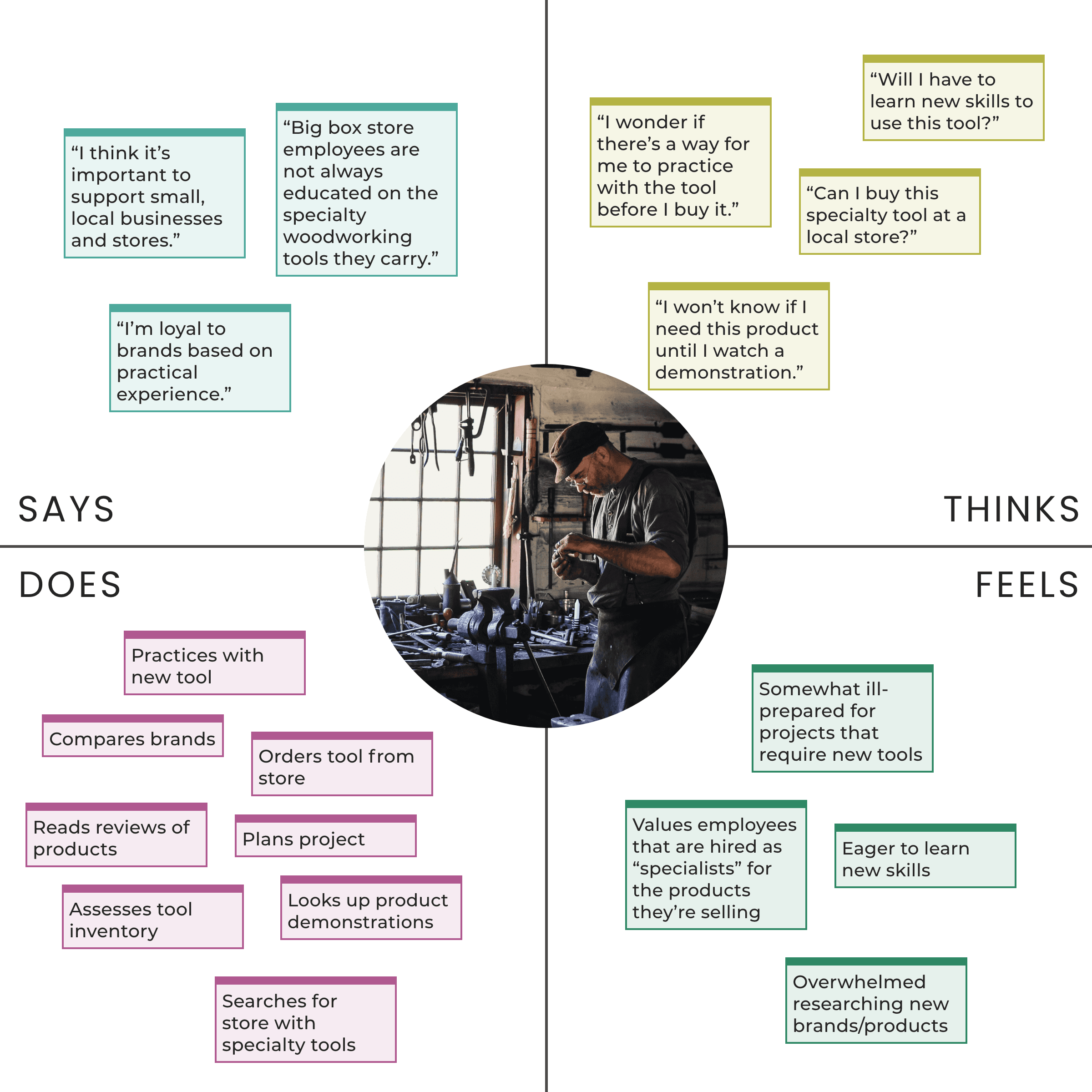
User interviews revealed that novice woodworkers tended to perform more in-depth explorations into quality woodworking products, while seasoned craftsmen stayed loyal to specific brands based on previous experience. Even so, all interviewees shared similar behaviors and frustrations in their pursuit of mastering the craft. To better articulate and empathize with the needs of the woodworking community, I developed a user persona and empathy map.
Persona
Rob Woodman, 35
The craftiest handyman & the handiest craftsman you'll ever meet!
With a drive to become an established and recognized name in the Greater Nashville Area and backed by his do-it-yourself mentality, Rob recently quit his secure, corporate job to pursue a full-time career in carpentry & woodworking.
In order to grow his brand and widen his current customer base, Rob spends countless hours researching quality woodworking products & tools and watching product demonstration videos online. He believes that by developing his woodworking skills and building upon his tool inventory, he will be able to provide top-quality craftsmanship to his customers.

Behaviors
Advocates for supporting small, local businesses and stores
Prefers shopping at specialty stores over box stores due to the unparalleled customer service and employee knowledge base
Spends time researching products to ensure the quality of the goods matches the price demanded
Continuously wants to strengthen skill set to both retain current customers and expand potential customer base
Frustrations
No small, local specialty woodworking supply stores in the area
Projects that require specialty tools often call for new skills to be learned as well
Comparison of high quality woodworking tools prior to purchase is difficult
Learning new skills through online product demonstrations can be challenging
Needs & Goals
Obtain quick and informative product suggestions from a trusted source
Build up inventory on an as-needed basis with high quality tools & supplies
Prevent unnecessary maintenance costs and ensure long useful life for purchased equipment
Enhance current woodworking skills while still allowing enough time to complete ongoing projects to customers' satisfaction
Empathy Map
Current State Process Flows
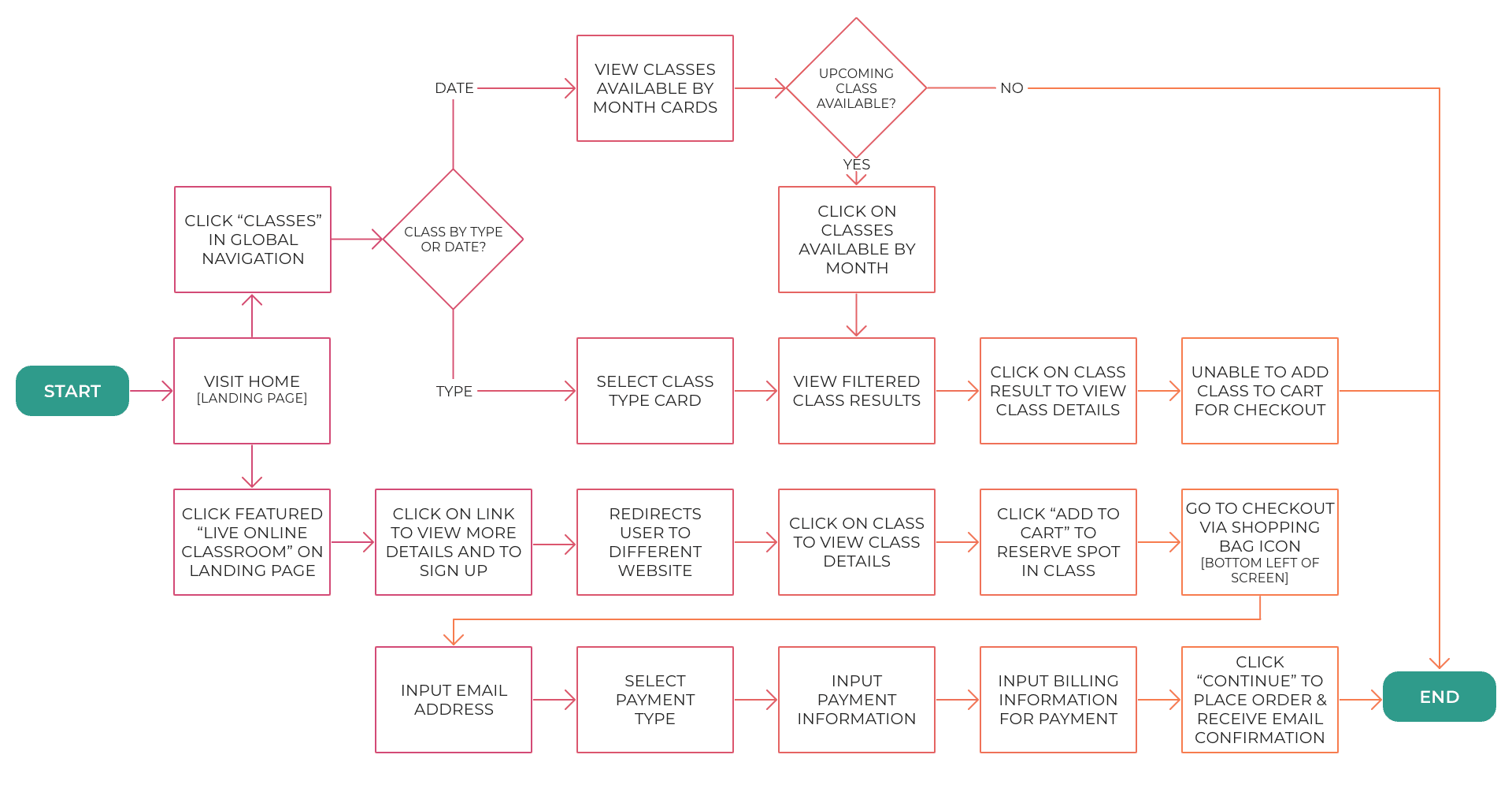
Once the user persona was established, I investigated the challenges faced by users by creating two retrospective user flows representing the paths required to: (1) book a class online, and (2) purchase a product online. My evaluation of these flows indicated that the current website experience led to several "end points" in each process, hindering users from executing on their end goals. As shown in the flows below, the conversion rates for both booking a class and purchasing a product were being negatively impacted by the paths currently in place.
Booking a Class
Purchasing a Product
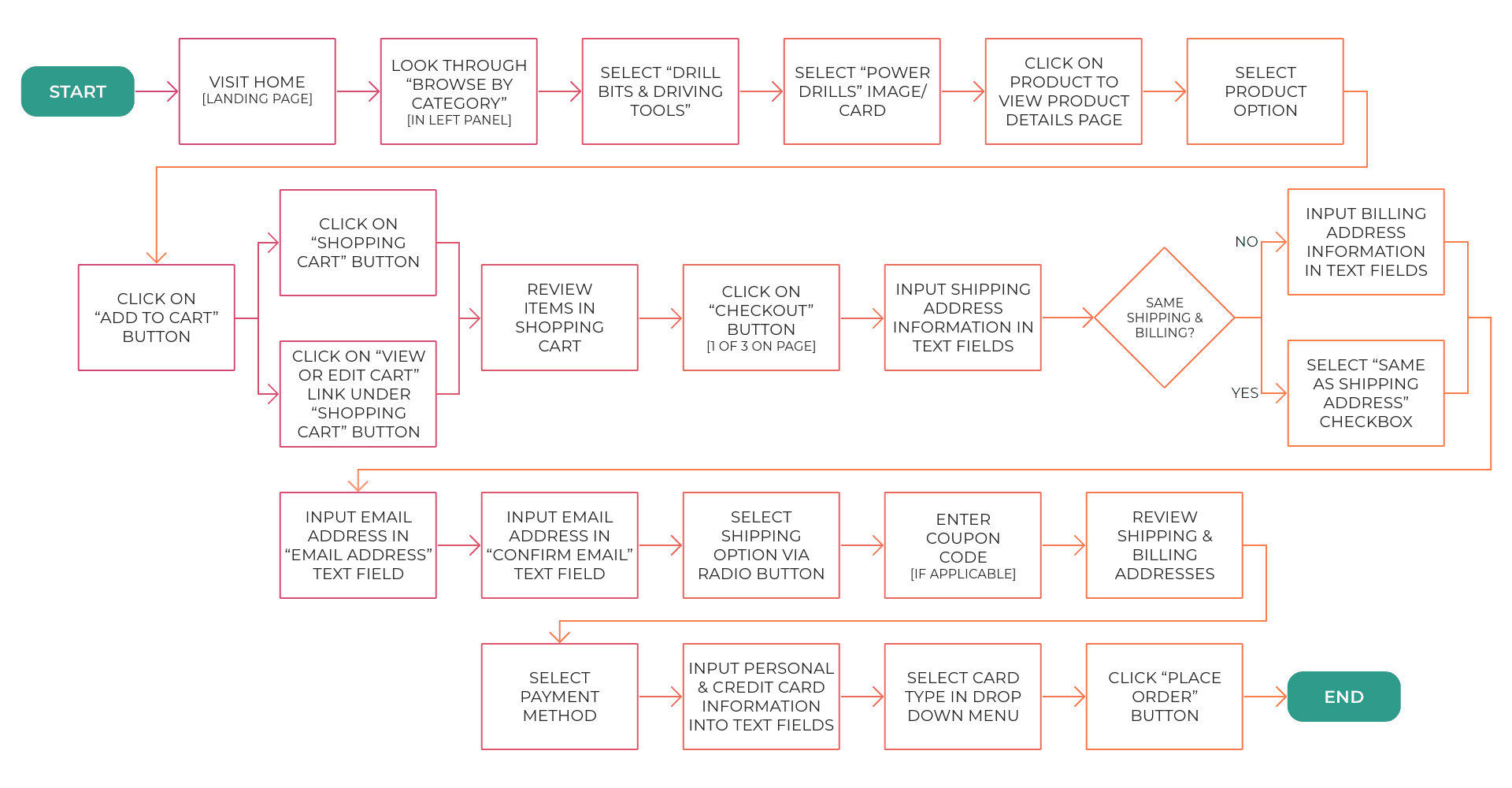
These dead ends made clear that streamlining the current navigation scheme was an essential step required to both increase the site's conversion rates and assist users in executing on their end goals.
How might we…
…equip woodworkers with the skills & tools needed to complete projects?
…create an easier comparison of specialty tools across brands?
…help reduce the time spent researching quality brands & manufacturers?
…make learning new woodworking skills more accessible to all users?
The Solution
A New Experience Built Around Expertise
A restructured information architecture, a consistent visual design system, and new features — all built around the insight that expertise, not products, was Highland Woodworking's real differentiator.
A New Navigation Structure
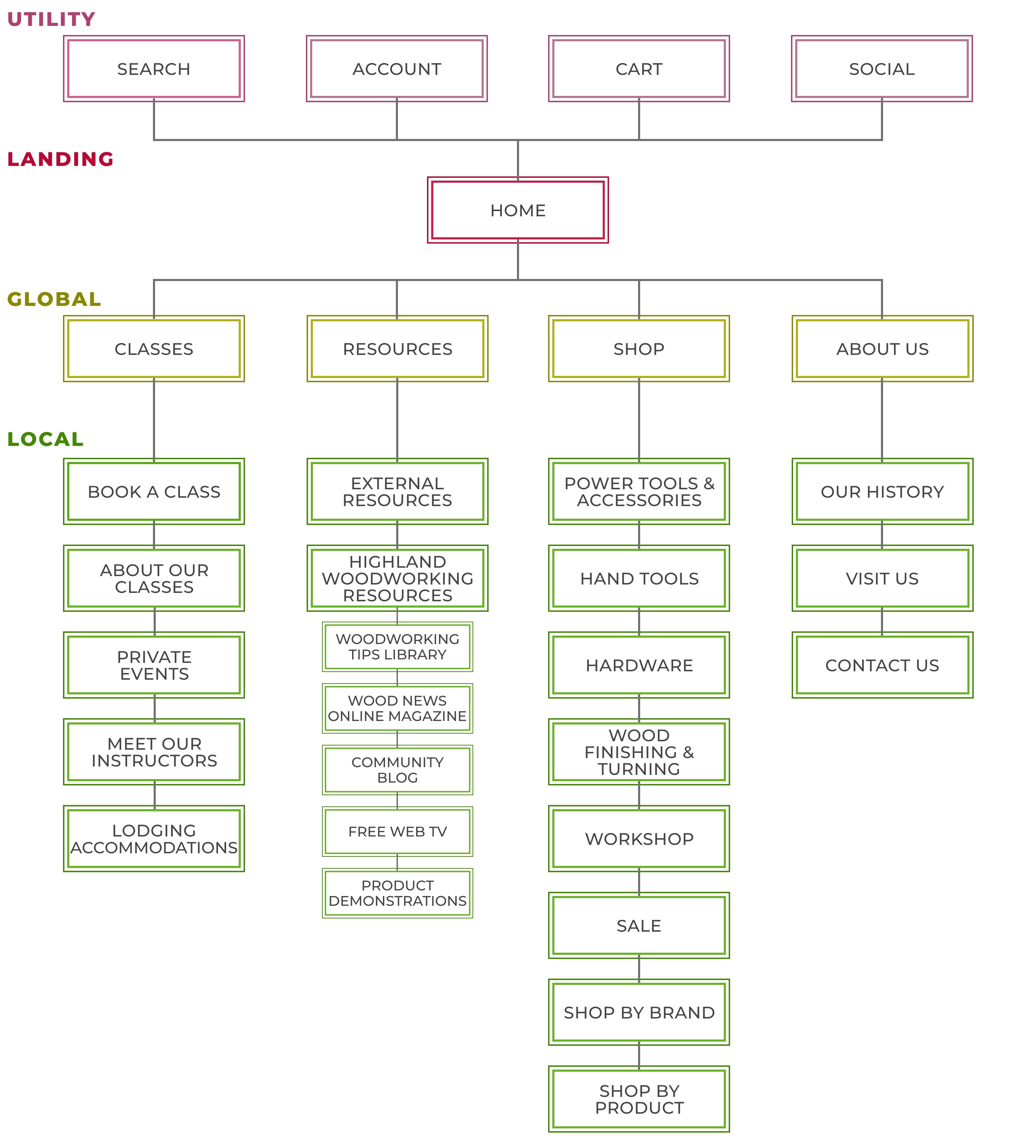
After conducting the heuristic evaluation, it was clear that a reorganization of the site's content was inevitable. I conducted a content audit to better familiarize myself with the goods and services offered by Highland Woodworking, which revealed the site's inventory fell into four general categories. I restructured the global navigation around these — with Classes and Resources leading, followed by Shop and About Us. Positioning knowledge-first wasn't just philosophically aligned with the research; it was a direct response to what users actually came for. The site map below shows the full restructured architecture.
Old Navigation
Inconsistent categories across service types
Products buried under unclear labels
Classes and seminars hard to find
Multiple dead ends in booking and checkout flows
New Navigation
Classes — primary navigation, front and center
Resources — tutorials, articles, product guides
Shop — clean product catalog with filtering
About Us — history, location, contact
Visual Design
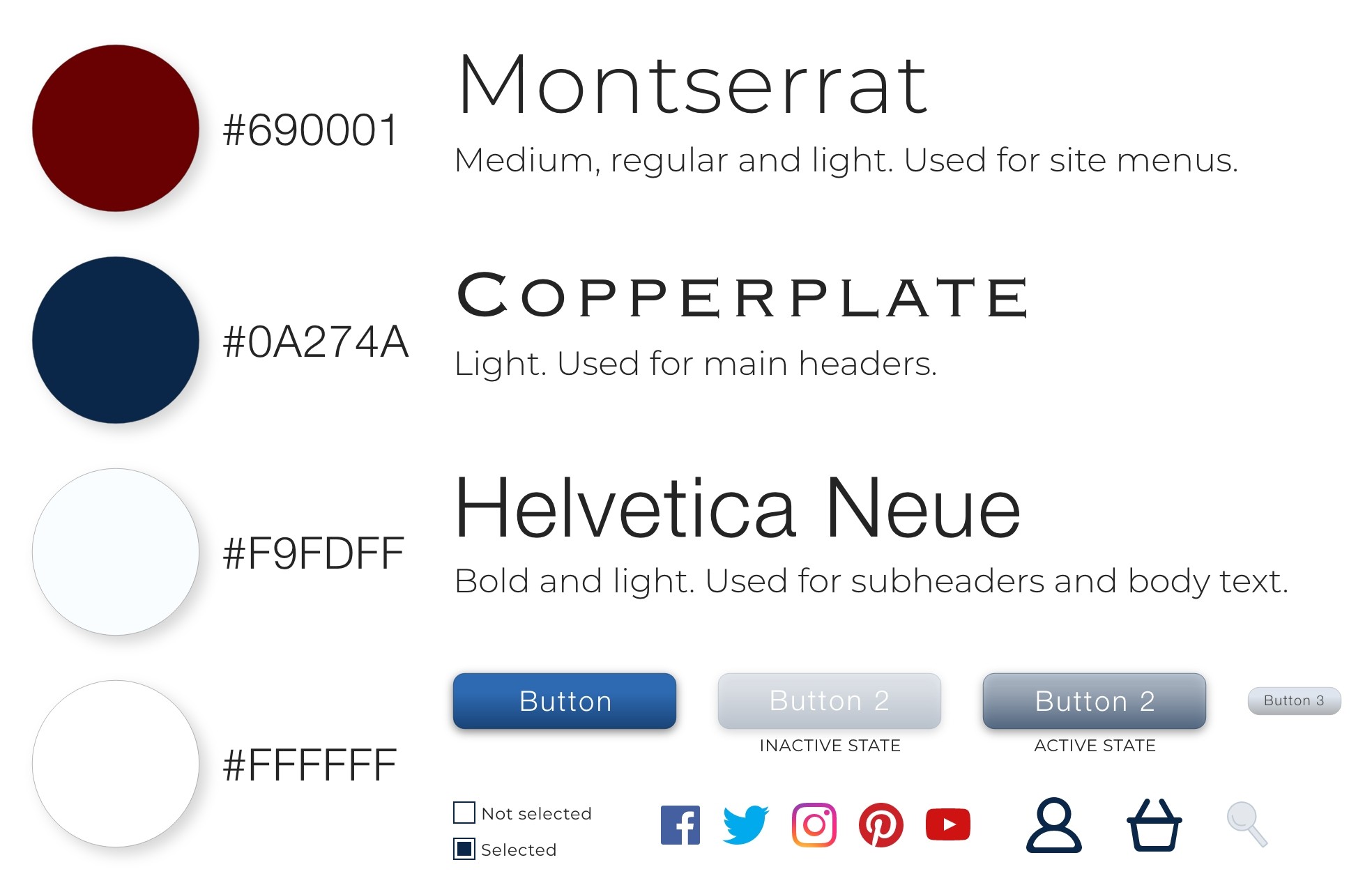
Building a consistent visual design system while maintaining the current brand image was essential. I created a simple and clean layout by increasing the amount of white space between page content, establishing a proper color palette, and reducing the number of typefaces and font variations. I increased the learnability of the site by designing uniform call-to-action buttons, and improved the visibility of site content by developing identifiable icons for account management, site checkout, and social media links. The visual design overview below details the style decisions made to bring the redesigned experience to life.
Wireframes & Key Features
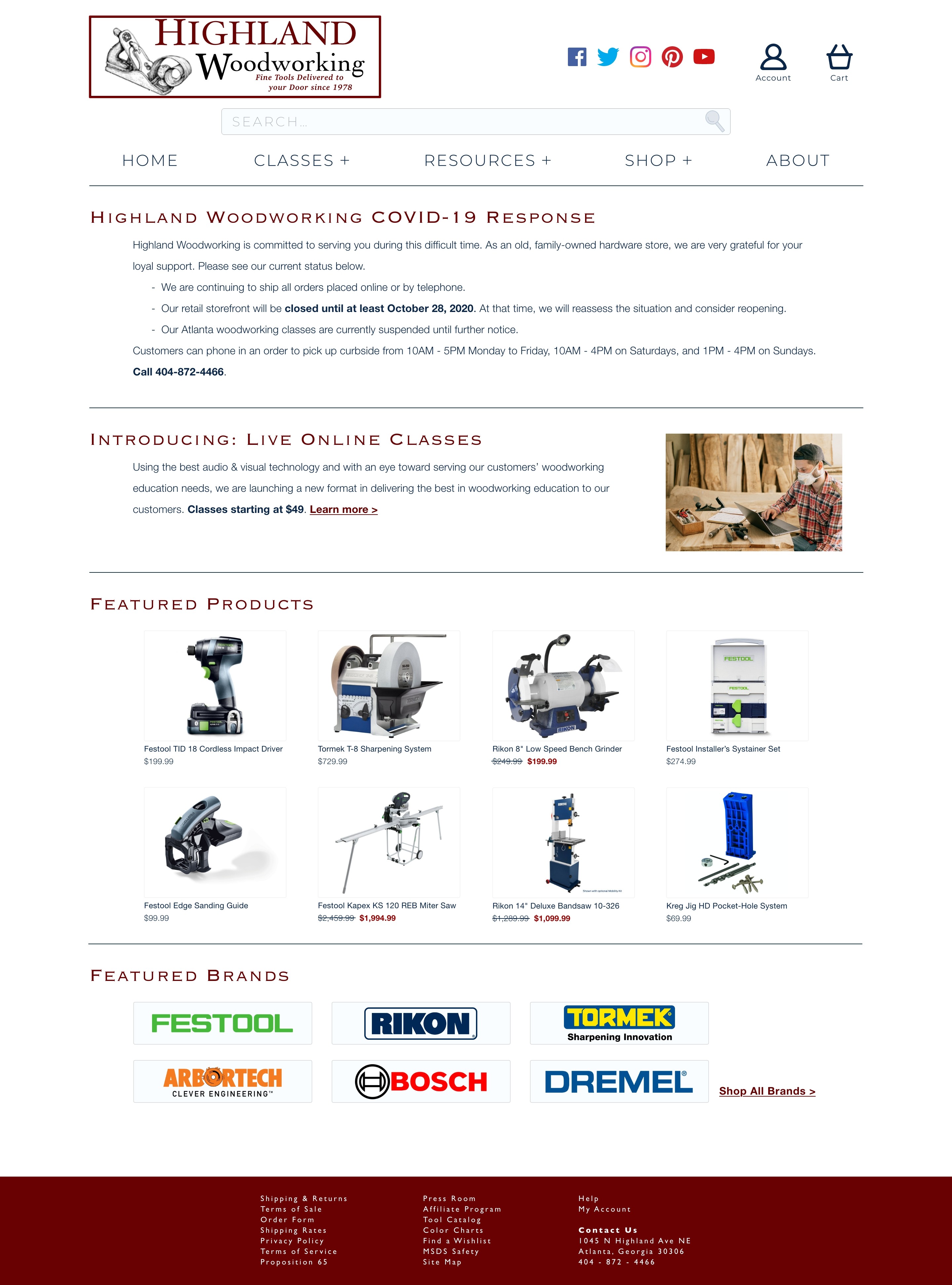
To give the client a tangible look at the potential interface, I translated the restructured navigation and design system into low-fidelity wireframes. These concepts focused on the three features most critical to the redesigned experience: the landing page, mega menus, class filtering, and checkout flow. Refer to the annotated wireframes below for each feature in detail.
Landing Page
Utilizing the updated site navigation scheme, I produced a landing page that focused on a simpler site architecture. Further, I reduced the amount of content initially presented to the user to decrease the amount of cognitive effort required to accomplish their specific needs & goals.
Feature: Mega Menus
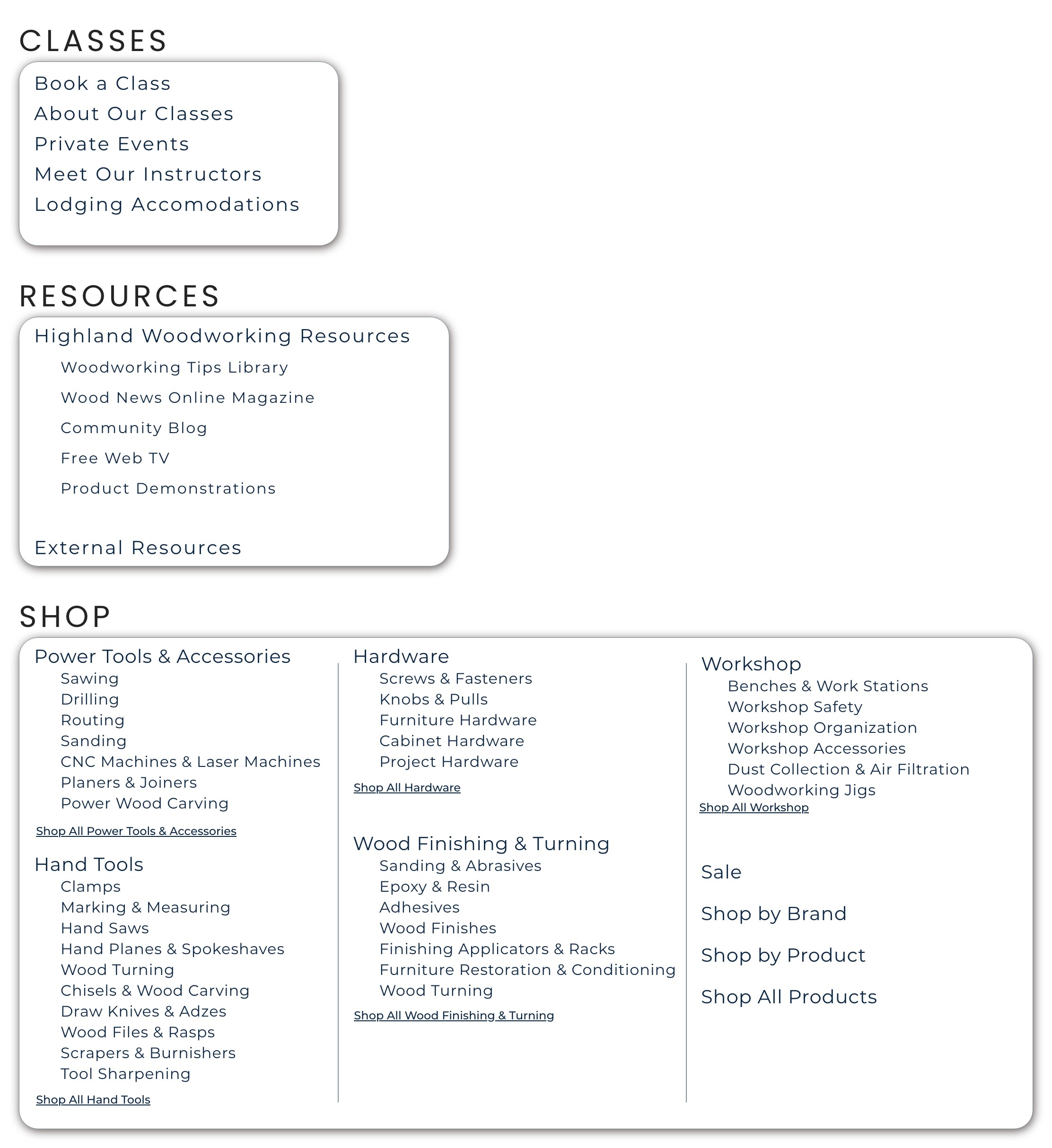
The implementation of mega menus on the site allowed for a more intuitive, structured presentation and organization of information within each of the primary navigation categories.
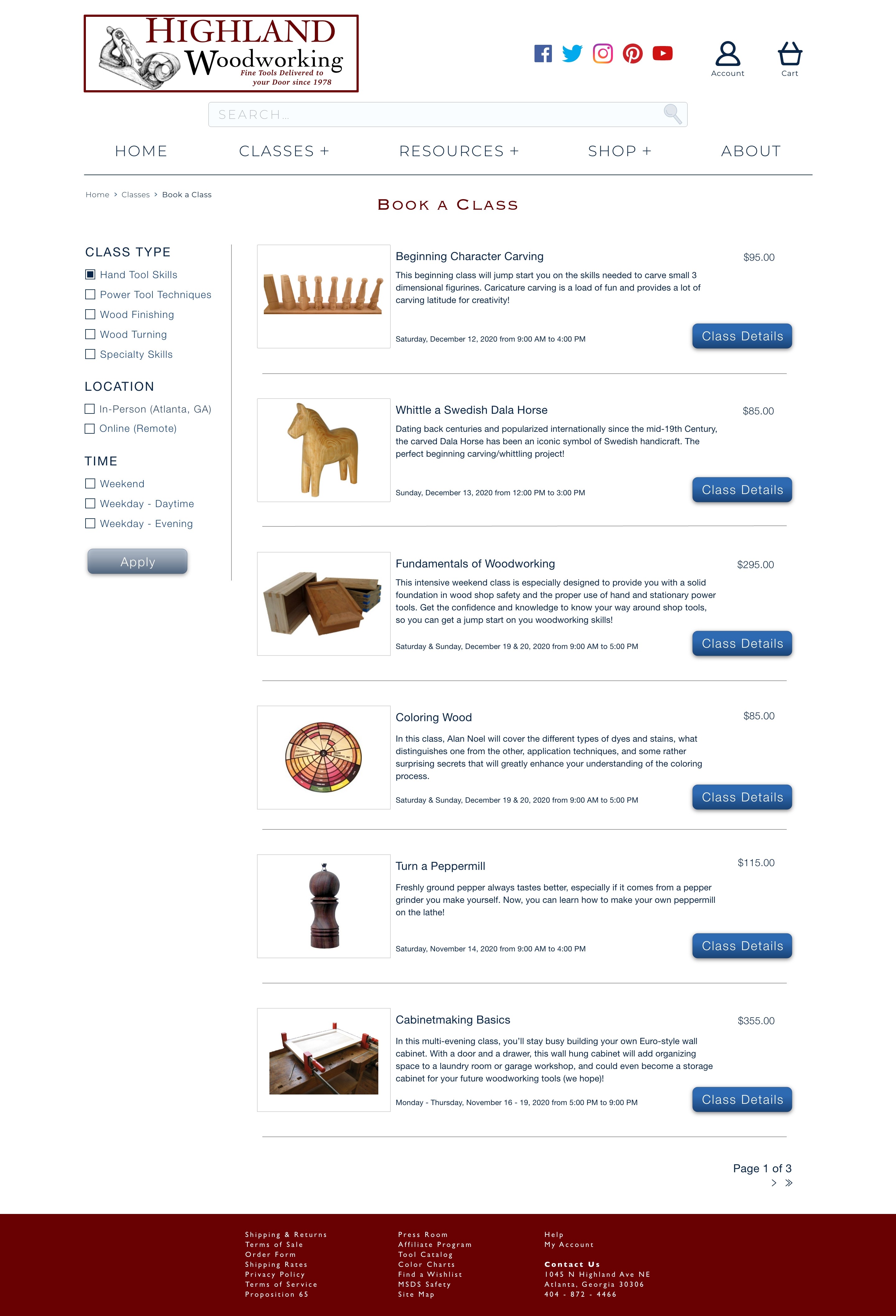
Feature: Filter
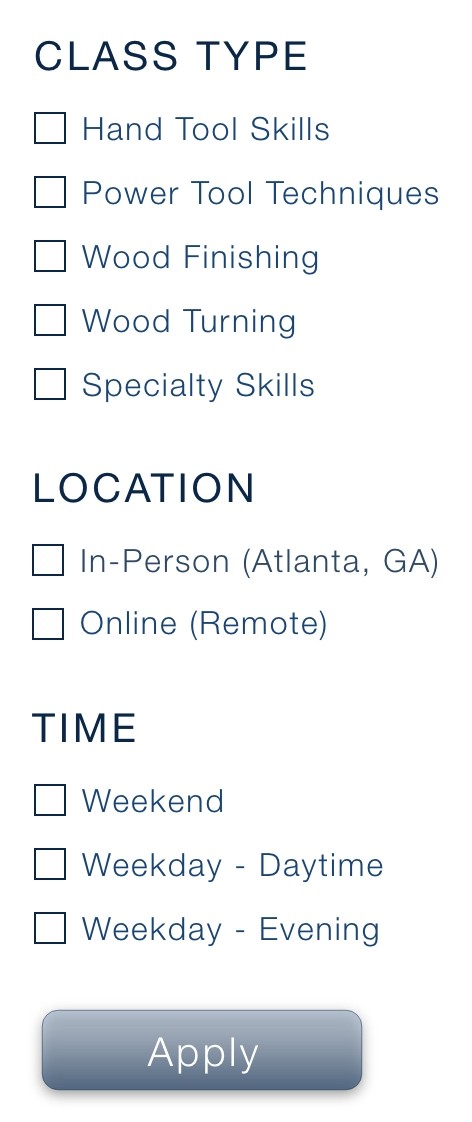
Research revealed that the proper use of certain woodworking tools required users to apply distinguishing skill sets. In considering these findings, one of the main features I wanted to implement in this design iteration was the ability to filter class results based on user needs & goals.
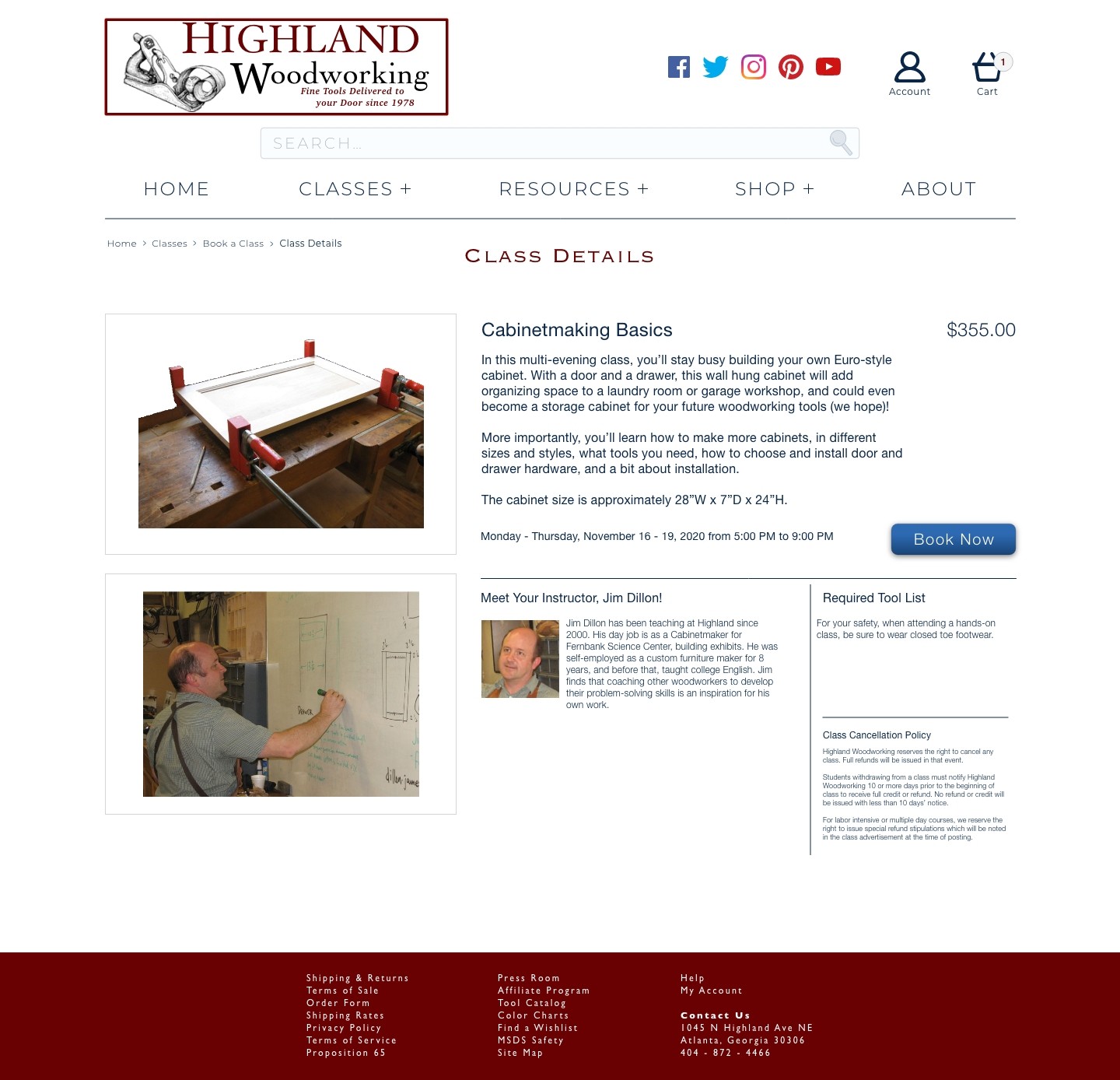
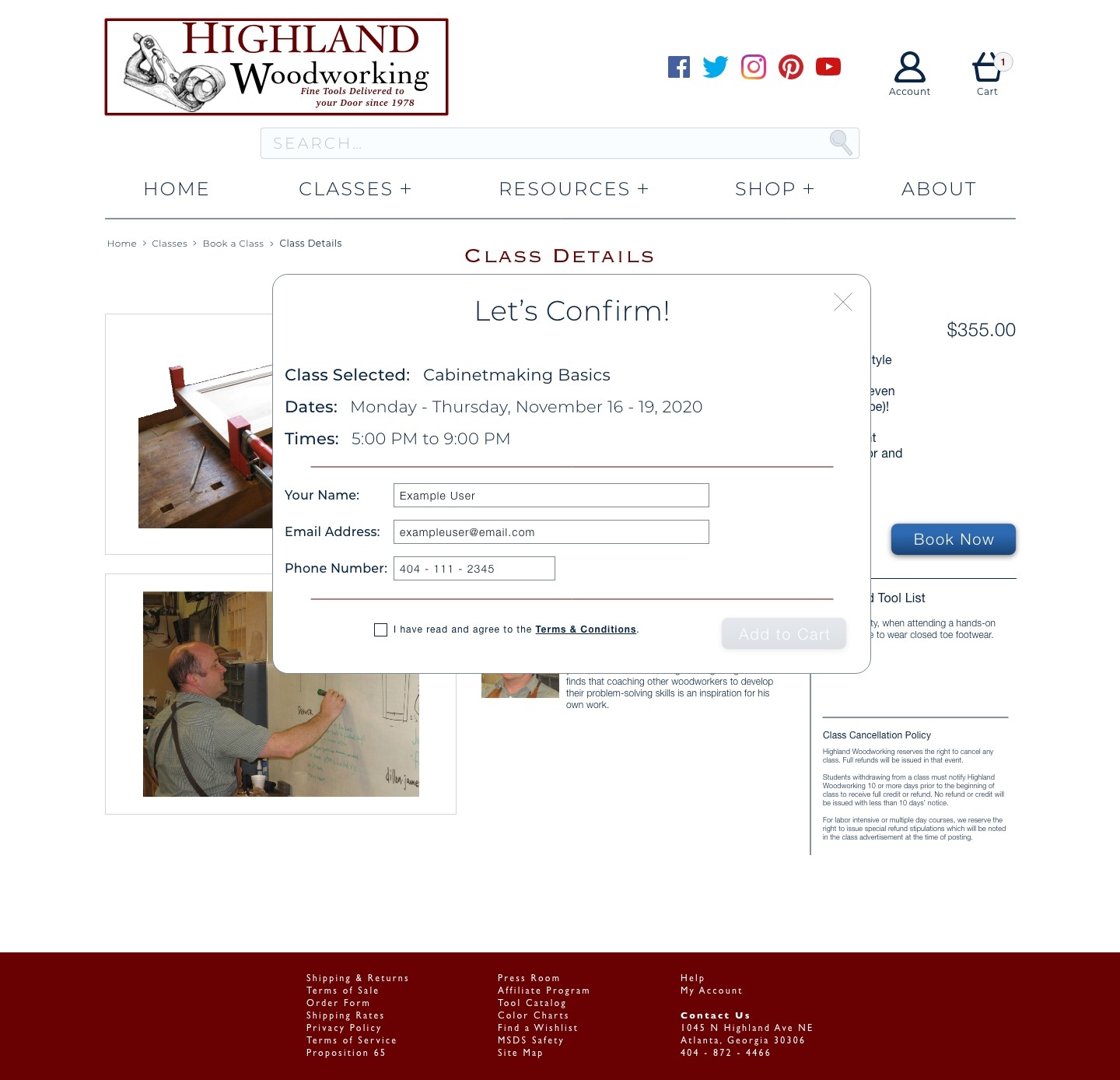
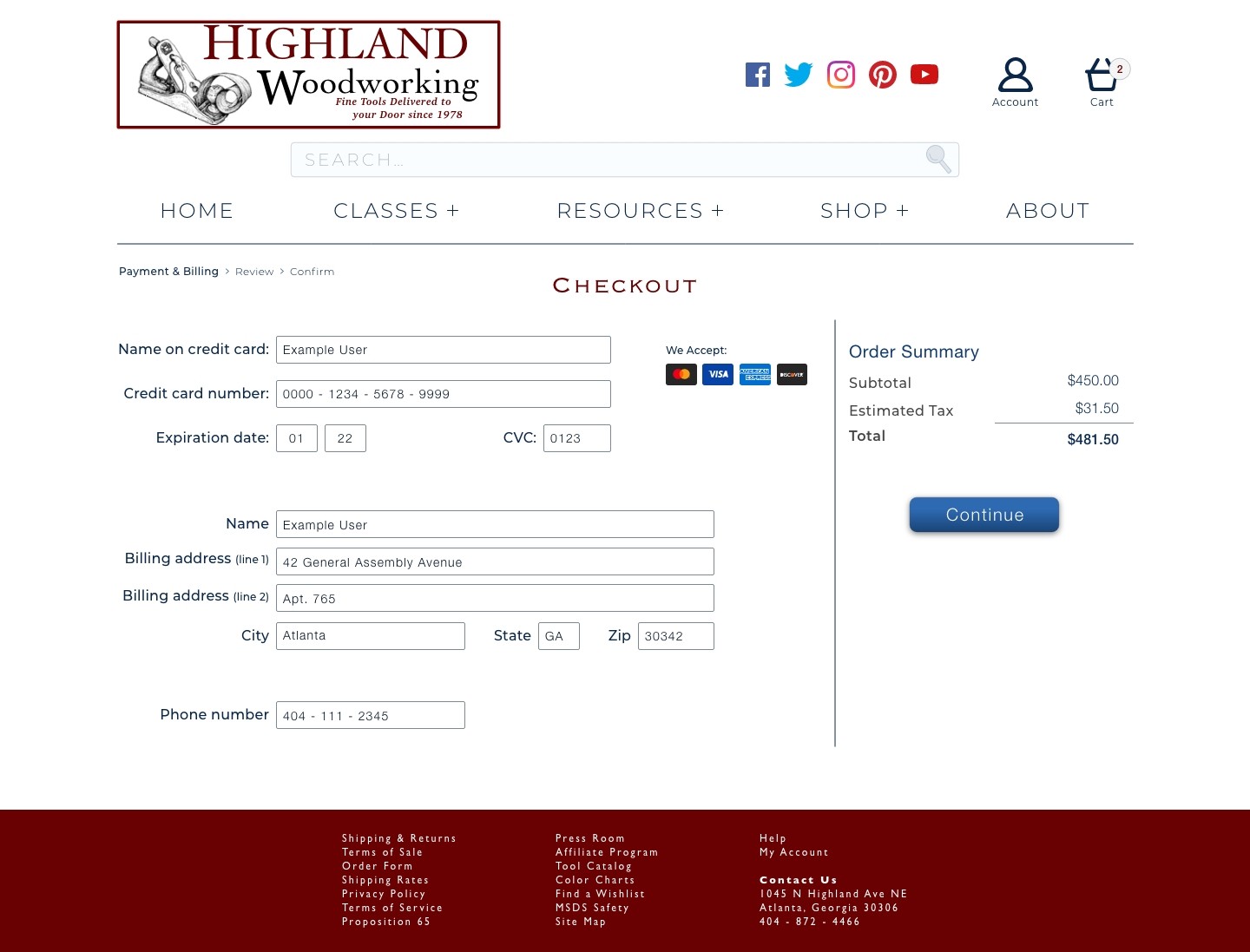
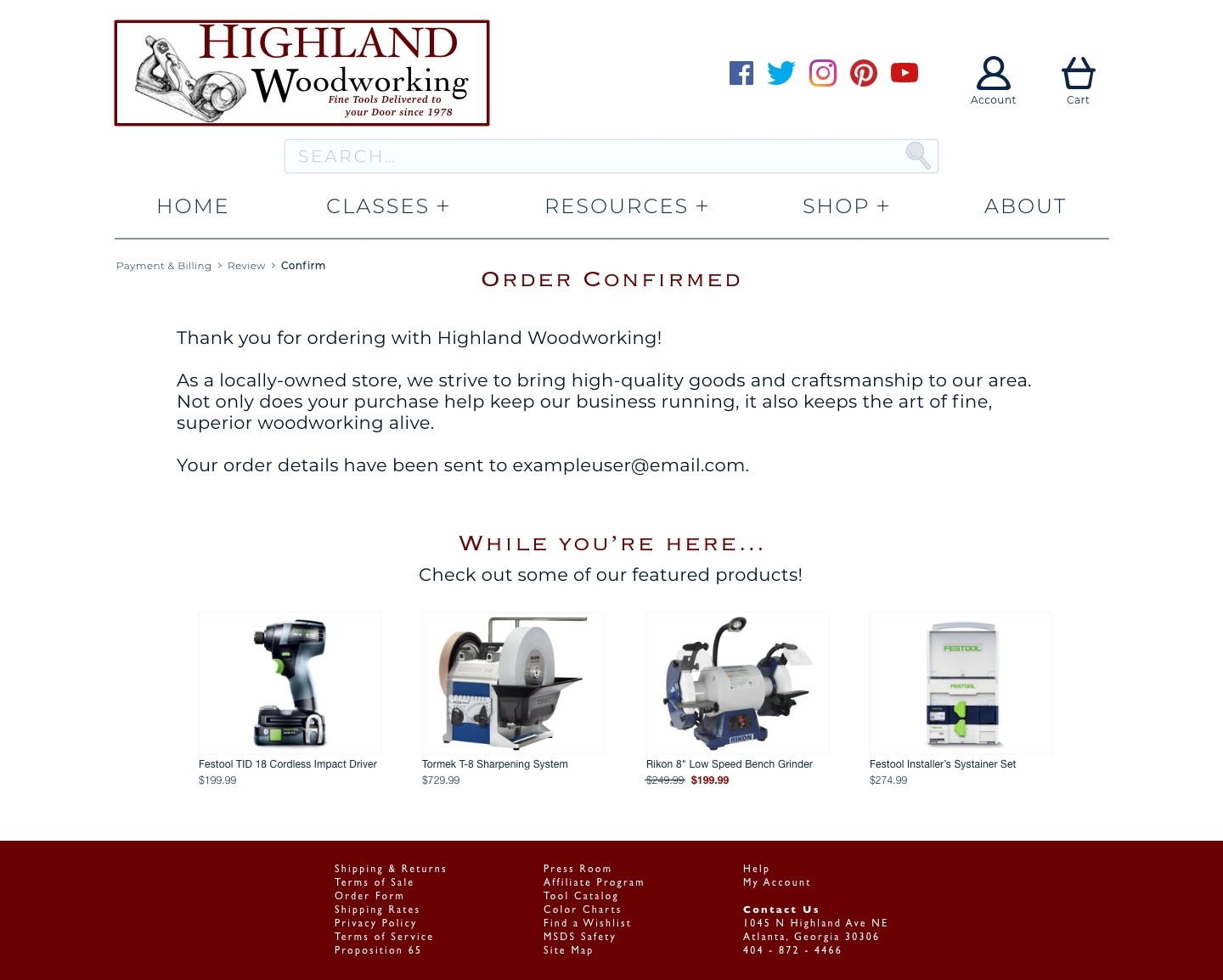
Checkout Process
The Outcome
One-Stop Woodshop
Highland Woodworking has an opportunity to separate themselves from their competitors by capitalizing on their ability to provide the products, skills, and knowledge required to excel in the woodworking community.
Facilitating a more intuitive approach to the craft of woodworking will increase the company's seminar-related revenue streams, reinforce customer base retention, and demonstrate why the company is highly qualified in providing their sophisticated woodworking expertise. As Highland Woodworking implements these changes to their online presence, the following indicators can be used to evaluate the performance of the redesigned website.
Measuring Success
Next Steps – Feature Prioritization
Priority Features
Brand/manufacturer comparison feature for tools
Video tutorials and product demos within product pages
Featured employee reviews for specific products
Key Takeaways
Align stakeholders on vision before design begins
Thorough discovery before redesign is always worth it
Benchmark against the right competitors, not the obvious ones
The brief is a hypothesis — follow the research
Featured Case Study

Product Strategy · Fintech
WOrk Sample

Claims Process Redesign
Client Work · Healthcare · Process Design